Home Theater Icons: A Designer's Real-World Embroidery Review
As someone who has spent years stitching custom apparel and refining designs for small businesses, I know that the difference between a good embroidery project and a great one often comes down to the specific design assets you choose. When I first encountered the Home Theater Icons set, my initial reaction was practical curiosity. In a market flooded with complex floral patterns and vintage typography, this collection stands out for its simplicity. But does "simple" translate well when converted from a digital vector into thread? I decided to put it to the test in real-world scenarios, from personal gifts to commercial boutique products.
The First Impression: Clean Lines and Clear Intent
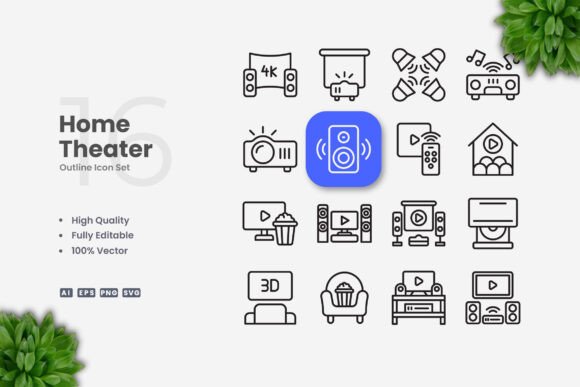
The moment you open the file, the visual personality of Home Theater Icons is immediately apparent. These are not heavy, ornate illustrations; they are streamlined graphics designed for clarity. The mood they create is modern, organized, and slightly nostalgic without being cluttered. For an embroidery designer, this is a crucial starting point. Complex icons often suffer when stitched because fine details get lost or threads bunch up. However, these icons seem built on the premise of clean shapes that can hold their form under tension.
The theme suggests entertainment, relaxation, and media consumption. Whether it is a stylized film reel, a popcorn bucket, or a speaker symbol, the shapes are distinct enough to be recognized instantly even at smaller scales. This makes them incredibly versatile for various applications. They feel right at home on a cozy throw pillow or a branded tote bag, but they also possess the professional polish needed for corporate merchandise or high-end boutique branding. The lack of unnecessary flourishes means the focus remains entirely on the subject matter, which is exactly what you want when creating a recognizable brand identity.
Real-Life Application: From Digital File to Finished Product
To truly evaluate this design, I imagined several concrete projects where Home Theater Icons would shine. Let's consider a scenario involving a custom embroidered tote bag for a local film club or a boutique selling movie-themed gifts. If I were to stitch these icons onto a canvas tote, the clean lines would contrast beautifully against the rough texture of the fabric. The negative space in the design allows the fabric texture to show through, adding depth to the finished product without requiring excessive thread usage.
Another strong use case is baby items. Parents love personalized gifts, and a simple icon set like this works perfectly for nursery decor or baby blankets. Imagine a soft cotton onesie featuring a tiny, embroidered film camera or a music note. Because the design is simple, it avoids looking overwhelming on small garments. It creates a subtle, sophisticated look that appeals to modern parents who prefer minimalism over loud, cartoonish graphics. Similarly, for holiday gifts, these icons can serve as charming accents on kitchen towels or aprons for the foodies who love watching cooking shows while they work.
For Etsy sellers and craft business owners, the versatility here is a goldmine. You can easily create a cohesive line of products—caps, patches, and sweatshirt embroidery—all using variations of the same Home Theater Icons motif. This consistency builds brand recognition. When a customer sees a matching set of a cap and a tote bag with the same clean aesthetic, it signals professionalism and attention to detail. It elevates the perceived value of your handmade products, making them more likely to sell at a premium price point.
Where Caution Is Required: Technical Challenges
While the design is promising, no single asset is perfect for every situation. As an experienced reviewer, I must highlight where Home Theater Icons might face challenges during the digitizing or stitching process. The primary concern lies in the size of the elements. If you attempt to use these icons in very small hoop sizes, such as those required for cuff embroidery or detailed hat patches, the fine strokes might become too thin to stitch effectively. Satin stitches require a certain width to lay flat; if the stroke weight is too narrow, the thread may break or fail to cover the underlying fabric completely.
Fabric choice is another critical factor. Textured fabrics like wool or heavy denim can sometimes obscure the clean edges of a simple icon. On stretchy fabrics, such as jersey t-shirts or sweatshirts, the stability of the design depends heavily on the quality of the stabilizer used. Without proper support, the simple geometric lines might pucker or distort, ruining the crisp look that makes these icons so appealing. Dark fabrics present their own challenge; if the icon design relies on white or light-colored threads for definition, you will need to ensure there is sufficient density to prevent the dark background from bleeding through.
Additionally, be mindful of curved surfaces. While caps and hats are popular canvases, the curvature can flatten the perception of depth in a 2D icon. If the design includes any lettering or extremely small details, testing on a scrap piece of the actual garment material is essential before committing to a final production run. Dense stitch areas within the icon could also cause issues if the machine pushes too much thread into a small space, leading to puckering or thread breaks.
Design Notes for the Professional Maker
If you are planning to use this embroidery file for commercial purposes or large batches of handmade products, there are several technical steps you should take to ensure success. First and foremost, always test the design on scrap fabric that matches your final project in both color and weight. This allows you to check how the stitch density interacts with the material and whether the thread colors provide the necessary contrast.
Review the digitization carefully. Check if the design utilizes a mix of satin stitch, fill stitch, and running stitch appropriate for the intended outcome. Sometimes, a purely satin-stitched icon looks too stiff, while a running stitch might look too delicate depending on the thread count. Ensure that the hoop size you plan to use accommodates the design without cutting off any edges. If the design includes tiny corners or intricate curves, inspect them closely to see if they need manual adjustment to prevent thread bunching.
It is also wise to create black and white mockups to visualize the design's silhouette without the distraction of color. This helps confirm that the shape is recognizable even when viewed from a distance. Furthermore, compare how the design performs on light versus dark backgrounds. If you are selling custom apparel or digital embroidery files for others to use, providing guidance on stabilizer types and thread choices can add significant value to your offering.
Final Thoughts on Value and Usability
In conclusion, Home Theater Icons offers a solid foundation for a wide range of embroidery projects. Its strength lies in its adaptability and clean aesthetic, which translates well across different mediums, from tote bag design to holiday embroidery. For designers looking to streamline their workflow while maintaining high-quality output, this set provides the necessary visual language without the headache of over-complicated digitizing.
However, success ultimately depends on the maker's ability to match the design to the right application. By understanding the limitations regarding fabric texture, hoop size, and stitch density, you can avoid common pitfalls and produce a finished product that looks as professional as it feels. Whether you are an Etsy seller expanding your inventory or a hobbyist creating a unique gift, these icons offer a reliable way to communicate a clear message through thread. Just remember to do your due diligence on the technical specs and licensing terms before diving into production, ensuring that your creative vision aligns with the practical realities of machine embroidery.