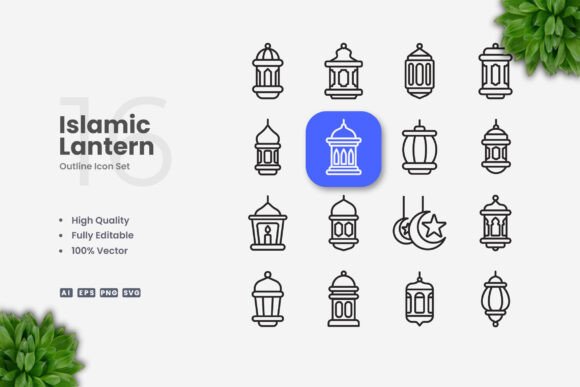
Islamic Lantern Icons: A Designer's Review
As someone who has spent years stitching intricate motifs and refining digital assets for clients, I know that the difference between a good embroidery project and a great one often comes down to the design itself. You can have the best machine and the finest thread, but if the underlying graphic doesn't translate well to fabric, the final product will feel off. Recently, I evaluated a set of Islamic Lantern Icons with the intention of using them in a commercial line of handmade goods. My goal was to see if these simple graphics could stand up to the rigors of real-world embroidery, from a custom tote bag to a delicate baby onesie.
The First Impression: Mood and Visual Personality
When you first open the file for Islamic Lantern Icons, the immediate feeling is one of calm and clarity. In a market saturated with overly complex patterns, this collection stands out because it embraces simplicity. The shapes are clean, the lines are deliberate, and there is no visual clutter. For an embroidery designer, this is music to the ears. It suggests a design that relies on form rather than excessive detail, which is crucial when translating vector graphics into stitches.
The mood created by these icons is respectful and elegant. They evoke a sense of tradition without being heavy or ornate. This makes them incredibly versatile. They don't scream for attention; instead, they offer a subtle nod to heritage that works beautifully in modern contexts. Whether you are designing for a boutique shop or creating a personalized gift, these icons carry a quiet dignity that customers appreciate. They feel like they belong in spaces where peace and reflection are valued, making them perfect for home decor items like pillow covers or kitchen towels.
Real-World Application: From Screen to Stitch
I decided to put these designs to the test by planning a small batch of custom embroidered tote bags for a local craft fair. The challenge with tote bags is that the canvas fabric can be thick and textured, and the surface area is large enough that any distortion in the design becomes obvious. I selected a mid-weight cotton canvas and prepared the stabilizer carefully.
The machine embroidery design translated surprisingly well. Because the icon is simple, the stitch density remained manageable, preventing the fabric from puckering—a common issue when working with dense fill stitches on heavy materials. The lantern shape held its integrity even after the hoop was removed. When I placed the finished bag on the table, the contrast between the thread and the canvas was striking. It looked professional, not amateurish.
I also considered how these icons would perform on smaller, more delicate items. Imagine a baby item, such as a muslin blanket or a soft cotton onesie. The clean lines of the Islamic Lantern Icons are gentle enough for a nursery setting. Unlike busy floral patterns that might overwhelm a small chest area, these icons provide a focal point that feels intentional and soothing. For a mother looking for a meaningful gift, the simplicity speaks volumes about quality and care.
Beyond apparel, I envision these graphics shining in commercial branding. An Etsy seller could use this design to create a cohesive brand identity across various products. Think of an embroidered patch for a denim jacket, a logo stitched onto an apron for a baker, or a decorative accent on a holiday gift box. The versatility allows for a consistent look whether the customer is buying a $50 sweatshirt or a $15 keychain. This consistency builds trust and makes a small business look established and reliable.
Where Caution Is Required
However, every designer knows that nothing is universally perfect. While Islamic Lantern Icons are robust, there are specific scenarios where they require careful handling. If you are working with a very small hoop size, you must ensure that the resolution of the original graphic is high enough to maintain the integrity of the curves. Tiny details in a vector file can sometimes get lost or become muddy when reduced significantly for a 4x4 inch hoop.
Texture is another factor. On highly textured fabrics like chunky knits or raw linen, the smooth lines of the icon might struggle to lay flat. Similarly, stretchy fabrics like jersey require a specific approach with stabilizers to prevent the design from distorting during wear. If you plan to embroider this on a curved surface like a baseball cap, the curvature of the hat will naturally alter the perspective of the lantern. You may need to adjust the digitization slightly to compensate for the curve, ensuring the lantern doesn't look squashed or elongated.
Dense stitch areas can also be tricky. If the design includes thick fill stitches, testing on scrap fabric is non-negotiable. You want to avoid a situation where the stitches are so close together that they create a stiff, cardboard-like feel on a garment meant to be soft. Additionally, if you are using dark fabric, the choice of thread color becomes critical. High contrast is usually best for visibility, but low-contrast combinations might wash out the elegance of the icon.
Practical Notes for the Embroidery Designer
If you are planning to incorporate these graphics into your workflow, here are some essential steps to ensure success. First, always test the design on a scrap piece of the actual fabric you intend to use. This helps you gauge the tension and identify any potential issues with thread breaks or fabric puckering before you commit to a finished product.
Review the stitch density closely. If the design feels too heavy, consider reducing the density or switching certain areas to a running stitch or satin stitch variation to add texture without bulk. Check your hoop size against the dimensions of the design; if the design is larger than your hoop, you may need to split the file or use a multi-hoop technique, which adds complexity to the process.
Inspect small details under magnification. Sometimes, what looks fine on a screen can appear jagged or incomplete once stitched. Ensure that the corners of the lantern are sharp and the curves are smooth. If you are unsure about the technical specifications, check the product description for details on file formats and compatibility. Since the product description mentions that you can resize, change color, or edit stroke weight, take advantage of this flexibility to tailor the design to your specific needs.
Finally, confirm the licensing terms before selling finished items. Many designers overlook this step, only to face legal issues later. Ensure that your license allows for commercial use of the finished products, especially if you are selling on platforms like Etsy or at craft fairs. Understanding the rights associated with the embroidery file protects your business and gives you peace of mind.
Final Thoughts on Value and Appeal
In the world of handmade products, the finishing touches make all the difference. Islamic Lantern Icons offers a level of sophistication that elevates any project. It transforms a standard t-shirt into a statement piece and turns a simple tote bag into a thoughtful accessory. The design respects the medium of embroidery, allowing the thread to shine without fighting against complex geometry.
For creative entrepreneurs and hobbyists alike, this design asset is a smart investment. It balances aesthetic appeal with practical usability, making it suitable for everything from personal gifts to mass-produced boutique merchandise. By choosing a design that is both visually pleasing and technically sound, you ensure that your customers receive a product they will cherish. Whether you are decorating a holiday gift or building a brand identity, these icons provide a solid foundation for success.
Ultimately, the decision to use Islamic Lantern Icons comes down to your vision. If you value clean lines, cultural respect, and professional results, this design delivers. Just remember to test, adjust, and execute with care, and you will find that these simple icons can create truly remarkable finished products.